
(PLUCKED OUT) —As one who did not grow up in Adventism, I became aware certain denominations may have sayings which when misunderstood they can silence the voice of rebuke. In my previous experience the saying was “Touch not the anointed”, this was interpreted to mean when you say something contrary to leadership you are attacking the Lord’s anointed. Hence, you are out of line. Within Adventism which I have discovered to be the truth, I have noticed there is yet another saying, that is, “the wheat and the tares grow together..”. What does this mean? Many Adventists it seems can see the problems within the church at a local, conference or union level. However, because they have been taught that the wheat and the tares grow together until the harvest, they are paralyzed in terms of what to do. They have now grown to believe that they cannot “get rid of the tares”, because that would be unwise. Why would they believe this? Well, inspiration through the prophetess has spoken.
“Has God no living church? He has a church, but it is the church militant, not the church triumphant. We are sorry that there are defective members, that there are tares amid the wheat. Jesus said: “The kingdom of heaven is likened unto a man which sowed good seed in his field: but while men slept, his enemy came and sowed tares among the wheat, and went his way…. So the servants of the householder came and said unto him, Sir, didst not thou sow good seed in thy field? from whence then hath it tares? He said unto them, An enemy hath done this. The servants said unto him, Wilt thou then that we go and gather them up? But he said, Nay; lest while ye gather up the tares, ye root up also the wheat with them. Let both grow together until the harvest: and in the time of harvest I will say to the reapers, Gather ye together first the tares, and bind them in bundles to burn them: but gather the wheat into my barn.” TM 45.1
Upon reading this quote it clear there will be tares with the wheat, so Seventh Day Adventists are not devoid of knowledge or understanding for believing wheat and tares would be in the church. Even in addition to this inspiration says:
“In the parable of the wheat and the tares, we see the reason why the tares were not to be plucked up; it was lest the wheat be rooted up with the tares. Human opinion and judgment would make grave mistakes. But rather than have a mistake made, and one single blade of wheat rooted up, the Master says, “Let both grow together until the harvest;” then the angels will gather out the tares, which will be appointed to destruction. Although in our churches, that claim to believe advanced truth, there are those who are faulty and erring, as tares among the wheat, God is long-suffering and patient. He reproves and warns the erring, but He does not destroy those who are long in learning the lesson He would teach them; He does not uproot the tares from the wheat. Tares and wheat are to grow together till the harvest; when the wheat comes to its full growth and development, and because of its character when ripened, it will be fully distinguished from the tares”. TM 45.2
Hence from reading these quotes, the understanding would be you should not touch the tares because that would be human opinion and Judgement, you don’t want to make that mistake. Lastly, an Adventist is taught that the tares will be sifted out at, near or just before the crisis (Sunday Law).
“The church may appear as about to fall, but it does not fall. It remains, while the sinners in Zion will be sifted out—the chaff separated from the precious wheat. This is a terrible ordeal, but nevertheless it must take place. None but those who have been overcoming by the blood of the Lamb and the word of their testimony will be found with the loyal and true, without spot or stain of sin, without guile in their mouths. We must be divested of our self-righteousness and arrayed in the righteousness of Christ”. 4LtMs, Lt 55, 1886, par. 18
If someone presented such quotes to a young budding Adventist, there can be no ill-will held as to why such an Adventist would be very hesitant towards separating from a local church where there is open sin. At the back of their mind, they would be scared to correct the wrong or separate themselves from it because they would be thinking “wheat and tares”. Add to this, the damage done by many movements which aren’t joined to the conference, and you’ll see the great conundrum facing this body of believers. We will later show how these quotes just be reading around them, defeat the way in which they are used.
Did Israel have sayings which at face value they thought they understood but had misinterpreted it?
The answer is yes, the Israelites were taught by Moses an eye for an eye. Exodus 21:8 “Eye for eye…” Now this command came from God. The leaders over time made the people understand this to mean you can take personal revenge if someone has done you evil “These words were but a reiteration of the teaching of the Old Testament. It is true that the rule, ‘Eye for eye, tooth for tooth’ (Leviticus 24:20), was a provision in the laws given through Moses; but it was a civil statute. None were justified in avenging themselves, for they had the words of the Lord: ‘Say not thou, I will recompense evil.’ ‘Say not, I will do so to him as he hath done to me.’ ‘Rejoice not when thine enemy falleth.’ ‘If he that hateth thee be hungry, give him bread to eat; and if he be thirsty, give him water to drink.’ Proverbs 20:22; 24:29, 17; Proverbs 25:21, 22 , R.V., margin”. MB 70.2 What was the problem? The words were just as they read but partially understood, they didn’t apply the words to the right time and context. Likewise, we will show how the teaching of wheat and tares have been partially understood. There is a context in which you have to get rid of tares, otherwise you’ll run into contradictions in the testimonies. For there are clear conditions for which someone must be removed from fellowship. The parable which was meant to teach longsuffering, is being twisted to teaching sin-permitting, without many realizing it.
What the wheat and tares mean
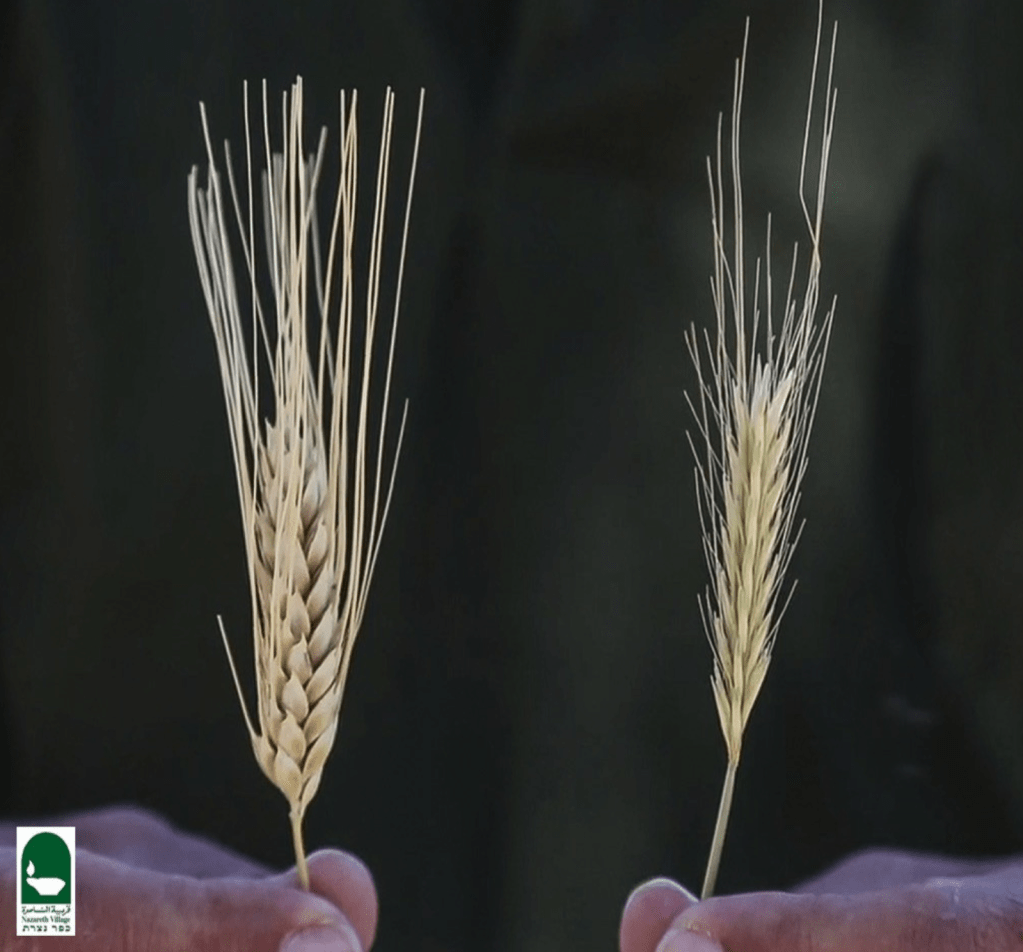
On the left (from the reader’s perspective) is a wheat and on the right is a tare. Wheat and tares look nearly identical, the reason you wait until the harvest to pull up the tares is because due to the lack of fruit produced in the tare, it will stand erect (symbolising pride). Where as the wheat will be full of “it’s fruit” (grain), and bow over (humility). Hence you can distinguish the wheat from the tares because the tares will be more prideful, as the wheat become more humble. However, during the growing process they will look strikingly similar.
Why is this previous understanding critical?
The application of the wheat and the tares in the Adventist church has been misunderstood, for many think it means, good and bad Christians grow together in church. Hence, if you see a “bad Christian”, that’s just a tare in the church and we should leave them. They will be sifted out at the Sunday law. However, the point of the wheat and the tares is that they look the same. In other words, then whole church should look like wheat and it’s only later that one can tell. Many Adventists believe that if you see a pastor promoting LGBT or Women’s ordination, that’s a tare. This is incorrect. That’s an open tare, a tare like in the parable is undiscernible they make failings like the disciples but it appears as if they are trying, the other class is just open rebellion. A tare should look like identical to the preacher of truth, it cannot be determined from the outside appearance whether they are a tare, they will say they agree with bible, spirit of prophecy, that they are in harmony with health reform and dress reform, but secretly their lives don’t comport, and no one can distinguish this because when you see them, they look and teach truth. That’s why you can’t uproot them because you can’t tell. Usually a tare will reveal itself in moments of crisis, or the Lord will make it known. “The tares have the appearance of wheat, but when the harvest comes, they must be rejected. Yet there is an imitation of the wheat through a long period of time”. 15LtMs, Ms 7, 1900, par. 22 Does a LGBT affirming pastor have the appearance of a present truth preacher? Clearly not. Maybe in suit, but you can tell they aren’t the same by the message they preach.
Hence, the same quote they use for wheat and tares, if you just read one more paragraph you’ll see that, when a tare makes itself known, you are meant to remove it.
“The church of Christ on earth will be imperfect, but God does not destroy His church because of its imperfection. There have been and will be those who are filled with zeal not according to knowledge, who would purify the church, and uproot the tares from the midst of the wheat. But Christ has given special light as to how to deal with those who are erring, and with those who are unconverted in the church. There is to be no spasmodic, zealous, hasty action taken by church members in cutting off those they may think defective in character. Tares will appear among the wheat; but it would do more harm to weed out the tares, unless in God’s appointed way, than to leave them alone. While the Lord brings into the church those who are truly converted, Satan at the same time brings persons who are not converted into its fellowship. While Christ is sowing the good seed, Satan is sowing the tares. There are two opposing influences continually exerted on the members of the church. One influence is working for the purification of the church, and the other for the corrupting of the people of God.” TM 46.1
Christ has given special light with how to deal with them, God’s appointed way for dealing with the tares is Matthew 18. There is meant to be church suspension for when a tare says “Hello! I’m a tare”. Just by reading the next paragraph you can see, you can only cut off the tares in God’s appointed way.
Judas was an example of a tare, no one but Christ could tell he was a defective member, he looked righteous and looked like he was preaching the truth, when rebuke and trial came, he revealed his true self, unconverted and unchanged. “Jesus knew that Judas was defective in character, but notwithstanding this, He accepted him as one of the disciples, and gave him the same opportunities and privileges that He gave to the others whom He had chosen. Judas was left without excuse in the evil course he afterward pursued. Judas might have become a doer of the word, as were eventually Peter and James and John and the other disciples. Jesus gave precious lessons of instruction, so that those who were associated with Him might have been converted, and have no need of clinging to the defects that marred their characters”. TM 46.2
According to Inspiration, tares aren’t people preaching false doctrine openly, they look true! A person doesn’t count as a tare until they are preaching or claim to believe in present truth at the very least. If they are openly against it or rejecting it, they aren’t even a tare yet. If a tare could never be uprooted, then the spirit of Prophecy could never outline matters for which a member should be suspended. For example:
“Here is defined the exalted position we should occupy. Let busybodies and accusers be visited and rebuked. If after thorough labor they do not hold their tongues in check, they should be suspended from church membership”. 13LtMs, Ms 43a, 1898, par. 37
People who go around accusing or gossiping about other people’s matters, they should be suspended from the church. It is no excuse to say “they are a tare” and we’ll grow together till the harvest. They must be put through the Matthew 18 process and disfellowshipped. Just by reading past the quote one can see, that tares can be removed, it’s just that God has an appointed way. Will you be able to remove every tare? No, that’s the point, some will confirm themselves at tares at the Sunday law. Which is why we need to take heed lest we fall. 1 Corinthians 10:12 “Wherefore let him that thinketh he standeth take heed lest he fall”.
When given a quote from the testimonies, read before and after and see if the context changes the conclusion, because some would have you believe if you see tares, you can’t touch, or do anything.
You aren’t to mingle with tares from choice. – “The tares and wheat are now commingled, but then the one Hand that alone can separate them will give to every one his true position. Those who have had the light of truth, and heard the warning message, heard the invitation to the marriage supper,—farmer, merchant, lawyer, false shepherds who have quieted the convictions of the people, unfaithful watchmen who have not sounded the warning or known the time of night,—all who have refused obedience to the laws of the kingdom of God, will have no right therein. Those who have sought an excuse to avoid the cross of separation from the world, will, with the world, be taken in the snare. They mingled with the tares from choice. Like drew to like in transgression. It is a fearful assimilation. Men choose to stand with the first rebel, who tempted Adam and Eve in Eden to disobey God. The tares multiply themselves, for they sow tares, and they have their part with the root of all sin—the devil”. SpTA04 6.2
When a minister sees a tare arising in his church and the sin is open, he is not to do nothing, it is to be dealt with, for other members of the church may mingle with the tare from choice and the potential wheat may end up a tare. “The Lord abhors indifference and disloyalty in a time of crisis in His work. The whole universe is watching with inexpressible interest the closing scenes of the great controversy between good and evil”. PK 148.1
Going back to testimonies to ministers, the tares get reproof “Although in our churches, that claim to believe advanced truth, there are those who are faulty and erring, as tares among the wheat, God is long-suffering and patient. He reproves and warns the erring, but He does not destroy those who are long in learning the lesson He would teach them; He does not uproot the tares from the wheat. Tares and wheat are to grow together till the harvest; when the wheat comes to its full growth and development, and because of its character when ripened, it will be fully distinguished from the tares”. TM 45.2 In the same way, the disciples received reproof when Jesus was on earth, they had faulty Characters, James and John wanted to call down fire on the Samaritans, the disciples sought to be ranked higher than one another, in the same way when people come into the church they will see our character faults.
“Some people seem to think that upon entering the church they will have their expectations fulfilled, and meet only with those who are pure and perfect. They are zealous in their faith, and when they see faults in church members, they say, “We left the world in order to have no association with evil characters, but the evil is here also;” and they ask, as did the servants in the parable, “From whence then hath it tares?” But we need not be thus disappointed, for the Lord has not warranted us in coming to the conclusion that the church is perfect; and all our zeal will not be successful in making the church militant as pure as the church triumphant. The Lord forbids us to proceed in any violent way against those whom we think erring, and we are not to deal out excommunications and denunciations to those who are faulty”. TM 47.1
Jesus didn’t excommunicate the disciples for their faults, however, they accepted their reproofs. Hence, wheat accept their reproof, but when a tare is reproved it acts out or may accept it for a time. “How tenderly the Saviour dealt with him who was to be His betrayer! In His teaching, Jesus dwelt upon principles of benevolence that struck at the very root of covetousness. He presented before Judas the heinous character of greed, and many a time the disciple realized that his character had been portrayed, and his sin pointed out; but he would not confess and forsake his unrighteousness. He was self-sufficient, and instead of resisting temptation, he continued to follow his fraudulent practices. Christ was before him, a living example of what he must become if he reaped the benefit of the divine mediation and ministry; but lesson after lesson fell unheeded on the ears of Judas”. DA 295.1 Hence, if someone continues in the error after being reproved they are stepping into Matthew 18 territory.
Let us think that Jesus has left no avenue for how to correct the erring and faulty. “Christ’s instruction as to the treatment of the erring repeats in more specific form the teaching given to Israel through Moses: ‘Thou shalt not hate thy brother in thine heart: thou shalt in anywise rebuke thy neighbor, that thou bear not sin for him.’ Leviticus 19:17, margin. That is, if one neglects the duty Christ has enjoined, of trying to restore those who are in error and sin, he becomes a partaker in the sin. For evils that we might have checked, we are just as responsible as if we were guilty of the acts ourselves”. DA 441.3
Regarding when Sister White says “the church may appear as about to fall”, many SDAs take this to mean the conference church, hence I must be in a conference church by the time the Sunday law takes place. We are only seeking to clarify this statement that it cannot mean this conclusion. Why? Because no matter however you slice it, when sister White says church here, she cannot mean “the legal organized structure of the Seventh-day Adventist church”. How do we know that?
This quote is clearly speaking about the Sunday Law of this it is very clear, however, at the Sunday law, the conference structure won’t exist anymore, if they refuse the Sunday law because all earthly support is cut off, they can’t use banks, you can’t pay for electricity to power the churches, you can only communicate with Seventh-day Adventist believers who are essentially near you. In fact before the Sunday Law, we are even to leave the cities.
“As the siege of Jerusalem by the Roman armies was the signal for flight to the Judean Christians, so the assumption of power on the part of our nation in the decree enforcing the papal sabbath will be a warning to us. It will then be time to leave the large cities, preparatory to leaving the smaller ones for retired homes in secluded places among the mountains. And now, instead of seeking expensive dwellings here, we should be preparing to move to a better country, even a heavenly” 5T 465.1
The structure will cease to exist if they reject the Sunday law. So to define the church as only the structure, it would be contradictory because it would fall. If something doesn’t exist anymore, that must count as a fall at the least. However, if they accept the Sunday Law then God wouldn’t even view that as his church anymore. The only definition of church that would match here are true believers in the SDA message. Just reading around the quote we can see what she’s saying clearly.
“We are to be ready and waiting for the orders of God. Nations will be stirred to their very center. Support will be withdrawn from those who proclaim God’s only standard of righteousness, the only sure test of character. And all who will not bow to the decree of the national councils, and obey the national laws to exalt the Sabbath instituted by the man of sin to the disregard of God’s holy day, will feel, not the oppressive power of Popery alone, but of the Protestant world, the image of the beast”. 4LtMs, Lt 55, 1886, par. 17 Notice she doesn’t say support will be withdrawn from the Seventh-day Adventist church, she leaves it general as “those”.
“Satan will work his miracles to deceive; he will set up his power as supreme. The church may appear as about to fall, but it does not fall. It remains, while the sinners in Zion will be sifted out—the chaff separated from the precious wheat. This is a terrible ordeal, but nevertheless it must take place. None but those who have been overcoming by the blood of the Lamb and the word of their testimony will be found with the loyal and true, without spot or stain of sin, without guile in their mouths. We must be divested of our self-righteousness and arrayed in the righteousness of Christ”. 4LtMs, Lt 55, 1886, par. 18
The church, consisting of those who reject the Sunday law will look like it’s losing, because many will abandon the platform of truth, and the church (body of true believers) will have to work under the most trying circumstances.
“The remnant that purify their souls by obeying the truth gather strength from the trying process, exhibiting the beauty of holiness amid the surrounding apostasy. All these, He says, “I have graven … upon the palms of My hands” [Isaiah 49:16]. They are held in everlasting, imperishable remembrance”. 4LtMs, Lt 55, 1886, par. 19
Here is the conclusion, the remnant are those who obey the truth, they are the church, in other words, the remnant isn’t everyone in the structure of the SDA church, but those who will be found pure through all the trials Satan brings. Of course we cannot assume “the church” to always apply to “Seventh-day Adventist organized GC structure”, because when one reads “Thousands upon thousands will listen who have never heard words like these. In amazement they hear the testimony that Babylon is the church, fallen because of her errors and sins…” GC88 606.2 Does one read that and say, the SDA church is what sister White is talking about here? No. From the context, the church here is Apostate Protestantism. Likewise, when we read the church may appear as it’s about to fall, we should not assume it’s the SDA GC structure, for at the Sunday law it falls either way, so from the context it cannot be the one form, the church that doesn’t fall has a true belief in the gospel.
Remember the wheat is not to sow itself among tares, meaning tares can be distinguished. “Christ requires personal faithfulness of his servants, and we are to show that we have no fellowship with the secret, hidden things of darkness. The wheat is not to sow itself among the tares; for although we may not practice the works of some of the members of the secret orders, in joining them we are registered in heaven as partakers of their evil deeds, responsible for their works of evil, and bound up in bundles with them as tares. Thank God, it is not too late for Christians to sever themselves from all unholy connections, and come fully unto the side of Christ. But while the church is to separate itself from evil-doers, to come out from among them, and be separate, and touch not the unclean, the Lord would not have his people judge and condemn others. The tares are permitted to grow among the wheat, to have all the advantage of sun and shower; but in the time of the harvest, “shall ye return, and discern between him that serveth God, and him that serveth him not;” for then every soul will be revealed in his true character. The tares will be bound into bundles to be burned, the wheat gathered into the heavenly garner”. RH January 10, 1893, par. 16
Notice a case of wheat and tare removal done prematurely.
“Another parable Jesus presents to his disciples—the field wherein good seed was sown, and, while sleeping, the enemy sowed tares. The question was asked the householder, “Didst not thou sow good seed in thy field? from whence then hath it tares?” “He said unto him, An enemy hath done this.” “The servant said unto him, Wilt thou then that we go and gather them up? But he said, Nay; lest while ye gather up the tares, ye root up also the wheat with them. Let both grow together until the harvest, and in the time of harvest I will say to the reapers, Gather ye together first the tares and bind them in bundles to burn them; but gather the wheat into my barn.” If faithfulness and vigilance had been preserved, if there had been no sleeping or negligence upon the part of any, the enemy would not have had so favorable an opportunity to sow tares among the wheat. Satan never sleeps. He is watching, and improves every opportunity to set his agents to scatter error, which finds good soil in many unsanctified hearts”. PH159 143.1
“The sincere believers of truth are made sad, and their trials and sorrows greatly increased, by the elements among them which annoy, dishearten, and discourage, them in their efforts. But the Lord teaches a lesson to his servants of great carefulness in all their moves. Let both grow together. Do not forcibly pull up the tares, lest in rooting them up, the precious blades will become loosened. The ministers and church should be very cautious, lest they get a zeal not according to knowledge. There is danger of doing too much to cure difficulties in the church which, if let alone, frequently work their own cure. It is bad policy to take hold of matters in any church prematurely. We shall have to exercise the greatest care, patience, and self-control, to bear these things and not go to work in our own spirit to set things in order”. PH159 144.1
“The work done in Boston was premature, and caused an untimely separation in that little church. If the servants of God could have felt the force of our Saviour’s lesson in the parable of the wheat and tares, they would not have undertaken the work they did. It should always be a matter of the most careful consideration and prayer before steps are taken which will give even those who are utterly unworthy the least occasion to complain of being separated from the church. Steps were taken in Boston which created an opposition party. Some were wayside hearers, others were stony-ground hearers. And still others were of that class who receive the truth while the heart had a growth of thorns, which choked the good seed, and those would never have perfected Christian character. But there were a few that might have been nourished and strengthened, and become settled and established in the truth, but the positions taken by Brn. Cornell and Waggoner brought a premature crisis, and then there was a lack of wisdom and judgment in managing the faction”. PH159 144.2
The problem here was that the separation from the church was done prematurely, not there were no persons worthy of being separated. She continues:
“If persons are as deserving to be separated from the church as Satan was of being cast out of Heaven, they will have sympathizers. There is always a class who are more influenced by individuals than they are controlled by the Spirit of God and sound principles; and they are, in their unconsecrated state, ever ready to take up upon the wrong side, and give their pity and sympathy to the very ones who least deserve it. These sympathizers have a powerful influence with others, and things are seen in a perverted light, and great harm is done, and many souls ruined. Satan, in his rebellion, took a third part of the angels. They turned from the Father and from his Son, and united with the instigator of rebellion. With these facts before us, we should move with the greatest caution. What can we expect in our connection with men and women with peculiar minds but trials and perplexity. We must bear this, and avoid the necessity of rooting up the tares, lest the wheat be rooted up also”. PH159 145.1
So hence, when going to Matthew 18, it should be done with a lot of prayer and caution, but it shouldn’t be ignored. Right move but wrong time. However, don’t let wheat and tares become a parable for inaction.
“It is a most dangerous error for those conducting sanitariums to think that to avoid strife they must suffer the good and bad to mingle, every one being responsible for himself. It is true that believers and unbelievers, the wheat and the tares, must grow together. But shall we do nothing to prevent impurity? Shall we make no effort to separate the vile from the righteous? We must search. We must exhort parents to guard their children. We must entreat those whose children are wicked to take them where they will do the least harm”. 16LtMs, Ms 104, 1901, par. 22
Therefore I ask “shall we make no effort to separate the vile from the righteous” and just say “Wheat and tares”, “Wheat and tares”. We are to be longsuffering, but not sin-permitting. One may say, but she’s talking about sanatoriums here, isn’t a church just as or more holy than a sanatorium? Hence, shouldn’t even a more holy place be kept just as safe?
 Sunday Laws Are Coming